guides
Home Espresso Cost Guide: Real Budgets from Entry to Prosumer
Real cost breakdowns for home espresso setups across every tier — entry, mid, prosumer, premium. Plus what to skip and what to spend on.
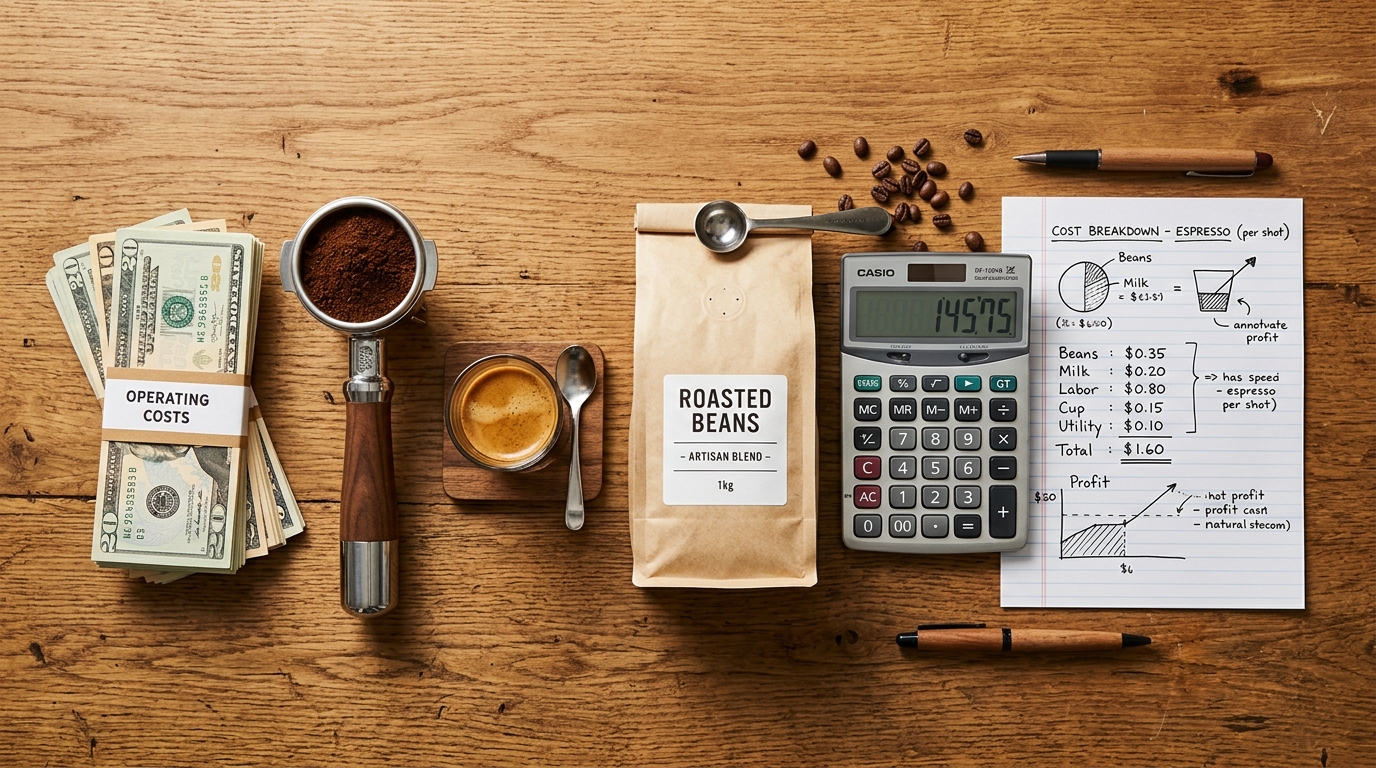
A home espresso setup is genuinely cheaper per shot than a cafe within 3-12 months depending on the tier you buy. The honest cost analysis: at $5 per cafe drink, a $1,500 setup pays back in 300 drinks. For a daily drinker, that’s under 12 months. But the upfront cost is real, and the tier-by-tier math is what most “how much does home espresso cost” guides skip. Here it is, with the hidden line items.
What’s in a full setup
Every home espresso setup needs four things; budgets that miss any of these are incomplete:
- Espresso machine — the visible cost
- Grinder — usually equals or exceeds the machine
- Accessories — scale, tamper, distribution tool, milk pitcher (if doing milk), cleaning supplies
- Beans — recurring cost; budget $20-40/month at typical specialty-coffee prices
The accessory budget is the most-commonly omitted line item. Plan for $100-200 in tooling beyond the machine and grinder.
Tier-by-tier breakdown
Entry tier: $700-1,000 total
Best for users new to home espresso who want quality without prosumer commitment
Breville Bambino Plus + Baratza Encore ESP + accessories
The cheapest path to legitimate home espresso. Bambino Plus at $500 + Encore ESP at $200 + accessories (scale, tamper, distribution tool, milk pitcher) at $80-120. Total: $780-820 for the full kit. The trade-offs are the 54mm portafilter (limited accessory ecosystem), pressurized basket as the default, and plastic-heavy build. Pays back in 5-8 months vs cafe drinks.
★★★★★ (3,200 reviews)
Check current price on Amazon →Line items:
- Machine: $500 (Bambino Plus)
- Grinder: $200 (Encore ESP)
- Scale with timer: $60 (Timemore Black Mirror Basic) or $20 (generic jewelry scale + phone timer)
- Tamper: $15-30 (54mm; included with machine often)
- Distribution tool / WDT: $20
- Milk pitcher: $15-25
- Cleaning kit: $15-25 (Cafiza powder, group brush, microfiber cloth)
- Total: $700-1,000
Mid tier: $1,200-2,000 total
Best for users ready for 58mm prosumer-quality espresso with mid-tier budget
Gaggia Classic Pro (modded) + Eureka Mignon Specialita
The Gaggia Classic Pro is the most-modifiable espresso machine in production. Out of the box it's \$500-600. PID mod ($40-60 in parts, $0-50 in labor if DIY) brings prosumer-tier temperature stability. OPV mod (free, 15 minutes with an Allen key) brings pressure to 9 bar from stock 11. Paired with the Eureka Mignon Specialita ($650-750) and accessories, total is $1,300-1,700 for a setup that genuinely competes with $3,000+ prosumer machines.
★★★★★ (4,100 reviews)
Check current price on Amazon →Line items:
- Machine: $500-600 (Gaggia Classic Pro)
- PID mod kit: $40-60 (DIY)
- 58mm naked portafilter: $60-80 (upgrade from pressurized)
- Precision basket: $30-50 (IMS, VST, or 9Barista)
- Grinder: $650-750 (Eureka Mignon Specialita)
- Scale with timer: $60-250
- Tamper (58mm): $25-60
- Distribution tool: $25-40
- Milk pitcher: $20-40
- Cleaning kit: $20-30
- Total: $1,430-1,960
Prosumer tier: $3,000-4,500 total
Best for serious home users ready for E61 group head and prosumer reliability
Lelit Mara X + Eureka Mignon Specialita
The Mara X is the entry to true E61-group-head espresso at $1,500-1,800. Paired with the Eureka Mignon Specialita ($650-750), accessories, and a quality scale, total is $2,400-3,000 for a setup that will last 15-20 years with regular maintenance. The Mara X uses heat exchanger design (not dual boiler), so back-to-back milk drinks require a brief temperature flush — for solo or couple use this is fine; for entertaining 4+ people you may want the Pro 600 dual-boiler upgrade.
★★★★★ (680 reviews)
Check current price on Amazon →Line items:
- Machine: $1,500-1,800 (Lelit Mara X)
- Grinder: $650-850 (Eureka Mignon Specialita or DF64)
- Scale with timer: $200-250 (Acaia Lunar)
- Tamper (58mm precision): $60-150
- Distribution tool: $40-80
- Naked portafilter: $80-120
- Precision basket: $40-60
- Milk pitcher: $40-80
- Cleaning + descaling kit: $30-50
- Water filter (BWT Bestmax or similar): $80-120
- Total: $2,720-3,560
Premium tier: $5,000+ total
Best for serious daily users; dual-boiler convenience for back-to-back milk drinks
Profitec Pro 600 + Niche Zero
The Pro 600 is the dual-boiler answer for users pulling 4+ drinks per session. Two separate boilers eliminate temperature recovery delay. E61 group head. Dual PID. Rotary pump option. Built for 15-20+ year operation. Paired with the Niche Zero ($850) and premium accessories, total is $4,000-5,000+ all-in. The cost is real but so is the daily quality.
★★★★★ (290 reviews)
Check current price on Amazon →Line items:
- Machine: $2,500-3,000 (Profitec Pro 600)
- Grinder: $850 (Niche Zero)
- Scale: $250 (Acaia Lunar)
- Premium tamper: $100-200 (Levercraft Ultra, Pesado)
- Naked portafilter: $120-180
- Precision basket: $50-80
- Milk pitchers (multiple sizes): $80-150
- Water filter system: $150-300
- Cleaning + descaling supplies: $50-80
- Total: $4,150-5,100+
Manual lever tier: $400-900 total
Best for best espresso per dollar at the low end; users who prefer mechanical purity
Flair 58 + 1Zpresso JX-Pro + kettle
The most underrated path. Flair 58 ($600-650) + 1Zpresso JX-Pro hand grinder ($170-220) + Fellow Stagg EKG kettle ($150-200) + accessories ($50-100). Total: $1,000-1,200 for a setup that competes with $2,500+ electric machines on shot quality. Trade-offs: arm involvement per shot, no built-in milk steaming (add Subminimal NanoFoamer for $80).
★★★★★ (1,400 reviews)
Check current price on Amazon →Line items:
- Manual lever: $600-650 (Flair 58) or $350-450 (Cafelat Robot) or $120-180 (Flair Neo Flex)
- Hand grinder: $170-220 (1Zpresso JX-Pro)
- Kettle: $150-200 (Fellow Stagg EKG) or any $30 kettle if you’re patient
- Milk frother: $50-80 (Subminimal NanoFoamer, if doing milk drinks)
- Accessories: $50-100
- Total: $420-1,200
Bean cost (recurring)
Quality beans for home espresso run $18-28 per 12oz bag from specialty roasters. At 18g per shot, a 12oz bag yields ~19 shots. So:
- Per shot bean cost: $0.90-1.50
- Per 12oz bag: $18-28
- Per month (1 drink/day): $28-44 in beans
For perspective: a $5 cafe drink × 30 days = $150/month. Even at the premium prosumer tier, beans+amortized equipment is well under cafe pricing within 18 months.
Payback math
Per-tier payback vs $5/day cafe spending:
| Product | Best for | Rating | Notes | |
|---|---|---|---|---|
| Entry tier ($800) | 5-8 months payback | — | 160 cafe drinks to break even. | — |
| Mid tier ($1,600) | 10-14 months payback | — | 320 cafe drinks to break even. | — |
| Prosumer tier ($3,200) | 18-24 months payback | — | 640 cafe drinks to break even. | — |
| Premium tier ($4,800) | 28-36 months payback | — | 960 cafe drinks to break even. | — |
| Manual lever ($800) | 5-8 months payback | — | 160 cafe drinks to break even. | — |
Math: assumes 1 drink/day, $5 cafe price (specialty espresso drink), no other variables. Doubling consumption halves payback time.
What to skip
Three line items frequently included in “espresso setup” lists that aren’t worth buying:
- Branded espresso machine cleaning tablets at $15+. Generic Cafiza powder ($12 for 1lb) does the same thing for 1/10 the per-use cost.
- Specialty espresso water (TWW, Third Wave Water). A BWT Bestmax water filter or basic Brita with hardness check works fine. Specialty water is for chasing the last 5% of perfection.
- Triple-portafilter setups (3+ portafilters per machine). Two portafilters is plenty (a 18g and a 14g for variation); three is overkill for most home users.
FAQ
Frequently asked questions
What's the absolute minimum to make real espresso?
How much does it cost to run an espresso machine?
Does it cost more to buy a "cafe" machine vs a "home" machine?
How long do home espresso machines last?
Used or refurbished — is it worth it?
How fast can I recover my upfront cost?
Bottom line
Realistic all-in budgets:
- Testing the habit / minimal: $400-700 (manual lever entry)
- Entry electric: $700-1,000 (Bambino Plus + Encore ESP)
- Mid tier serious: $1,400-2,000 (Gaggia Classic Pro modded + Eureka Mignon)
- Prosumer: $2,700-3,600 (Lelit Mara X + Specialita)
- Premium: $4,000-5,500+ (Profitec Pro 600 + Niche Zero)
Pick the tier that matches your actual consumption frequency. A $3,000 setup used twice a day for 5 years works out to roughly $0.80 per drink (amortized + beans). A $5,000 setup used once a week is $2.50+ per drink. Match the tier to your use.
For specific picks: machines, grinders, manual lever, setup guide, or the pillar setup overview.