guides
How to Make a Lungo at Home
Learn to pull a lungo at home: grind adjustment, extraction ratio, timing, and how it differs from an Americano or regular espresso shot.
 Elena Marchetti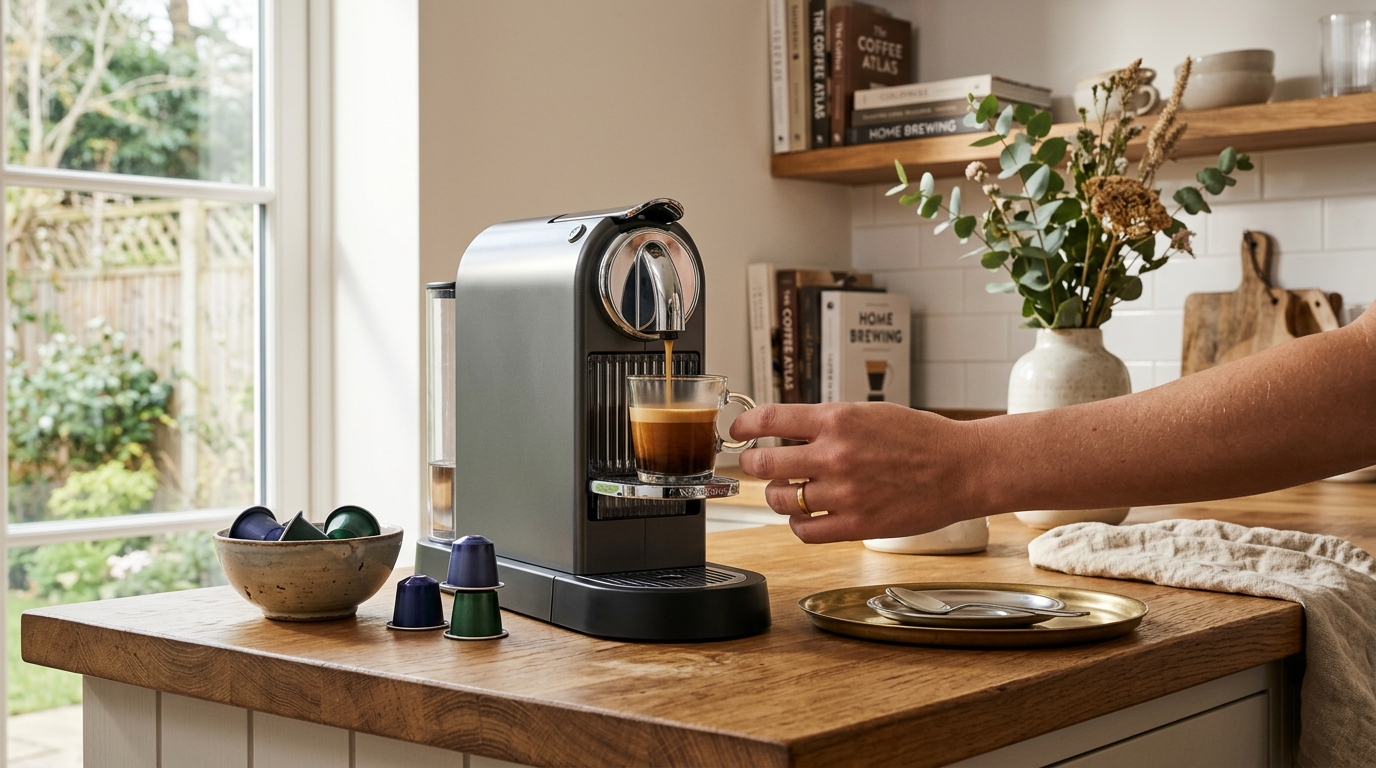
A lungo is a long espresso shot pulled with the same dose but more water — typically 18 g in and 54-70 g out, extracted over 45-60 seconds. The result is a 2-2.5 oz drink that is lighter in body and less concentrated than a regular espresso but carries more roasty, bitter notes from the extended extraction. A lungo is not an Americano: no water is added after the shot; the extraction itself runs long.
What is a lungo?
Lungo is the Italian word for “long.” In espresso terminology, a lungo is a shot that uses the same basket dose (typically 17-19 g) as a regular double but extracts 54-70 g of liquid instead of the standard 36-40 g double espresso yield. To move that much water through the grounds at 9 bars of pressure, the shot runs for 45-60 seconds — roughly double the time of a normal pull.
The extended extraction dissolves more compounds from the coffee, including more bitter, roasty, and slightly astringent elements that do not make it into a standard espresso. The result is a drink that is lighter in strength but not necessarily more balanced — it has a different, more complex bitterness. A lungo is bigger than an espresso but smaller and stronger than an Americano, and it has a distinct character that neither of the others shares.
Nespresso popularized the lungo format with their dedicated Lungo capsules — those run at about 110-130 ml (3.7-4.4 oz). A traditional barista lungo on an espresso machine runs smaller: 54-70 ml (1.8-2.4 oz).
Lungo vs Americano: the key distinction
This distinction matters and is frequently confused. An Americano is a standard espresso shot (18 g in, 36 g out, 25-30 seconds) with 4-6 oz of hot water added to the cup after pulling. The espresso flavor is diluted but not changed by extended extraction.
A lungo extracts through the grounds for longer. The water travels through the coffee bed itself, pulling more compounds as it goes. The flavor is different — more bitter, more roasty, somewhat astringent — and the drink is stronger than an Americano of the same total volume.
If you want a milder, coffee-forward espresso drink, an Americano is the more forgiving route. If you want the specific lungo character — with its deeper, extracted bitterness and concentrated body — you need to run the shot long in the machine itself.
What you need to make a lungo
An espresso machine with programmable shot volume or manual override. To pull a lungo, you need to either program a larger volume into your machine or hold the brew button until you reach your target yield. Most machines with a dedicated lungo button are factory-set for this. Single-lever and manual machines give you full control.
A kitchen scale. The key to a repeatable lungo is weighing the output, not estimating by volume or time alone. An espresso scale that fits under your portafilter — like the Acaia Lunar or Timemore Black Mirror — makes dialing in the lungo yield accurate and consistent.
A medium-dark or dark roast espresso blend. Lungo extraction draws out more bitter and astringent compounds from light roasts, often producing a harsh, vegetal result. A dark or medium-dark espresso roast is much more forgiving at extended yield — the roasty, caramelized flavors hold up and often develop pleasant sweetness in the lungo range.
Best for tracking lungo extraction by weight
Timemore Black Mirror Basic+ Espresso Scale
The Timemore Black Mirror is a sub-$80 espresso scale with a built-in timer, USB-C charging, and a thin profile that fits under most portafilters. It reads to 0.1 g and responds fast enough to catch the longer extraction window a lungo requires. A reliable value pick for home lungo dialing.
★★★★★ 4.7 · 3,800 reviews
Check current price on Amazon→How to make a lungo: step-by-step
Step 1. Start with your standard espresso grind, then adjust coarser
Begin with whatever grind size produces a good double espresso on your setup. A lungo needs slightly coarser grinding than your standard setting to accommodate the longer extraction without over-extracting and turning harsh. The goal is a grind that flows at 9 bars for 45-60 seconds to reach your target yield.
On most stepped grinders, one to two settings coarser than your espresso position is the right starting point. Dial in by pulling a test shot and tasting.
Step 2. Dose and tamp as normal
Use your standard dose — most home setups run 17-19 g in the basket. Distribute and tamp exactly as you would for a regular espresso. The dose does not change for a lungo; only the target output yield and extraction time change.
Step 3. Set your scale and timer
Place your cup on the scale, tare to zero, and start the timer when you start the machine. For a lungo, you are targeting 54-70 g of liquid out — a 1:3 to 1:4 ratio relative to your dose. Pulling 18 g in means targeting 54-72 g out.
A shot that reaches yield in under 40 seconds is flowing too fast — grind slightly finer. A shot that has not reached yield after 65 seconds is flowing too slow — grind slightly coarser.
Step 4. Pull the shot
Start the machine and watch the weight, not just the clock. Stop at your target yield — typically 54-70 g for an 18 g dose. Shot color lightens noticeably toward the end of the pull as more water passes through, and some thin, pale crema will appear alongside the richer golden crema from the earlier extraction phase.
Do not stop based on crema color alone. Weighing the output is the most reliable indicator of a consistent lungo.
Step 5. Evaluate and adjust
Taste the lungo immediately. A well-pulled lungo should have:
- A lighter body than your standard double espresso
- Distinctly bitter and roasty notes without being harsh or astringent
- A lingering finish with some sweetness from caramelization in the roast
- A thin but present crema on top
If it tastes overly astringent or papery, the grind was too fine or the extraction ran too long — grind slightly coarser or reduce the target yield. If it tastes thin and sour with little bitterness, it was under-extracted — grind finer or extend the yield slightly.
Best for integrated grinder for easy lungo dialing
Breville Barista Express Impress Espresso Machine
The Barista Express Impress has a built-in grinder with 25 grind settings and programmable shot volume, making it straightforward for home lungo pulling. Set the grind one step coarser than your espresso position and program your lungo yield — the machine handles it consistently from there. Around $800 for a complete one-machine setup.
★★★★★ 4.6 · 5,200 reviews
Check current price on Amazon→Grind size for a lungo: the most important variable
Getting the grind right is where most home lungo attempts go wrong. The common mistake is pulling a lungo at your standard espresso grind — that produces a shot that runs too fast (under 30 seconds to reach the higher yield) and under-extracts: thin, sour, and flat.
The correct lungo grind is coarser than espresso but still fine enough to create sufficient resistance at 9 bars. On a stepped grinder, start one to two clicks coarser than your espresso setting. On a stepless grinder, rotate the adjustment wheel a small amount coarser and re-pull.
Signs your lungo grind is correct:
- Shot reaches 54-70 g yield in 45-60 seconds
- Golden crema visible without channeling or spurting
- Flavor is bitter and roasty without being harsh or astringent
Signs your grind is too fine:
- Shot takes longer than 65 seconds to reach target yield
- Distinctly astringent, dry, or metallic finish
- Visible channeling in the portafilter basket
Signs your grind is too coarse:
- Shot reaches target yield in under 35 seconds
- Sour, thin, acidic flavor with little roasty character
- Crema is pale and disappears quickly
Lungo extraction ratio guide
| Product | Best for | Rating | Notes | |
|---|---|---|---|---|
| Ristretto | Sweetest, most concentrated shot | ★★★★★ | 18 g in / 27 g out — 1:1.5 ratio, pulls in about 20-25 seconds | Check price |
| Standard double espresso | Balanced strength and body | ★★★★★ | 18 g in / 36-40 g out — 1:2 ratio, pulls in 25-30 seconds | Check price |
| Lungo | Roasty bitterness, lighter body | ★★★★☆ | 18 g in / 54-72 g out — 1:3 to 1:4 ratio, pulls in 45-60 seconds | Check price |
| Americano | Diluted espresso, larger volume | ★★★★☆ | Standard espresso plus 4-6 oz hot water added to the cup — less extraction-driven bitterness than a lungo | Check price |
| Gran Lungo (Nespresso) | Lungo in a capsule machine | ★★★★☆ | Nespresso capsule format at 150 ml — capsule machines use lower pressure and more water than traditional espresso | Check price |
Best beans for a lungo
Bean selection has a bigger impact on lungo quality than most home brewers expect. Extended extraction amplifies everything in the bean — defects and off-notes in lighter roasts become more pronounced, while roasty sweetness in dark roasts develops further.
Medium-dark and dark espresso blends are the most forgiving and typically the best-tasting lungos. Italian and traditional espresso roasts — Lavazza Super Crema, Illy Classico, or Caffe Kimbo Gold Medal — produce smooth, chocolatey lungos with defined bitterness and no harshness.
Single-origin light roasts are challenging in a lungo. The longer extraction amplifies acidity and astringency. If you want to try a light roast, keep the yield shorter (closer to 1:3 ratio) and grind slightly coarser to moderate the extraction.
Fresh beans matter for lungos just as for any espresso. Use beans roasted within the past 2-4 weeks. Stale beans produce flat, papery lungos regardless of technique.
Best for reliable medium-dark roast for lungos
Lavazza Super Crema Espresso Whole Bean Coffee
Lavazza Super Crema is one of the most popular blends for home lungo brewing. It produces a smooth, caramel-forward cup at standard espresso ratios and develops a clean roasty sweetness when pulled long. At around $17 per 2.2 lb bag it is excellent value for everyday lungo use, and consistent bag to bag.
★★★★★ 4.6 · 18,400 reviews
Check current price on Amazon→Common lungo mistakes to avoid
Pulling at your standard espresso grind. At a standard espresso grind, a lungo-volume shot flows too fast and under-extracts. Always adjust coarser when switching to lungo ratios.
Adding water after the shot. If you pull a normal 36 g espresso shot and then add water to the cup, you have made an Americano, not a lungo. The lungo extraction must happen in the machine with more water going through the grounds.
Using light-roast beans without adjusting. Light roasts can work in a lungo but they require a careful, shorter yield and a coarser grind. The default lungo approach — just pull longer at standard settings — produces harsh, astringent results with light roasts.
Not weighing the output. Estimating lungo volume by eye or stopping on a color change is inconsistent. A scale removes guesswork and makes your lungos repeatable from session to session.
Pulling into too small a cup. A lungo yields 54-70 ml of liquid. A standard demitasse (60 ml) fills nearly to the brim, which leaves no room for crema to develop and makes it difficult to serve cleanly. Use a 4-6 oz glass or standard cappuccino cup.
FAQ
Frequently asked questions
What is the difference between a lungo and an Americano?
How long should a lungo take to pull?
What grind size should I use for a lungo?
Can I make a lungo with a Nespresso machine?
Is a lungo stronger than a regular espresso?
What cup should I use for a lungo?
Bottom line
A lungo is a straightforward espresso format once you understand the key variable: grind coarser than your standard espresso setting, weigh your output to 54-70 g from an 18 g dose, and let the shot run 45-60 seconds. The result is a bigger, lighter-bodied espresso drink with distinctive roasty bitterness — different from both a concentrated espresso and a diluted Americano. Medium-dark and dark roasts perform best. A scale is essential — repeatable lungos depend on weighing yield, not guessing. Once dialed in, a lungo adds a genuinely distinct espresso experience to your home brewing rotation.
For more: how to pull a perfect espresso shot, espresso grind size guide, lungo vs americano, and how to dial in espresso.