guides
How to Make an Espresso Tonic at Home
How to make an espresso tonic: the right espresso-to-tonic ratio, best tonic water brands, and exact steps for a crisp, refreshing result every time.
 Elena Marchetti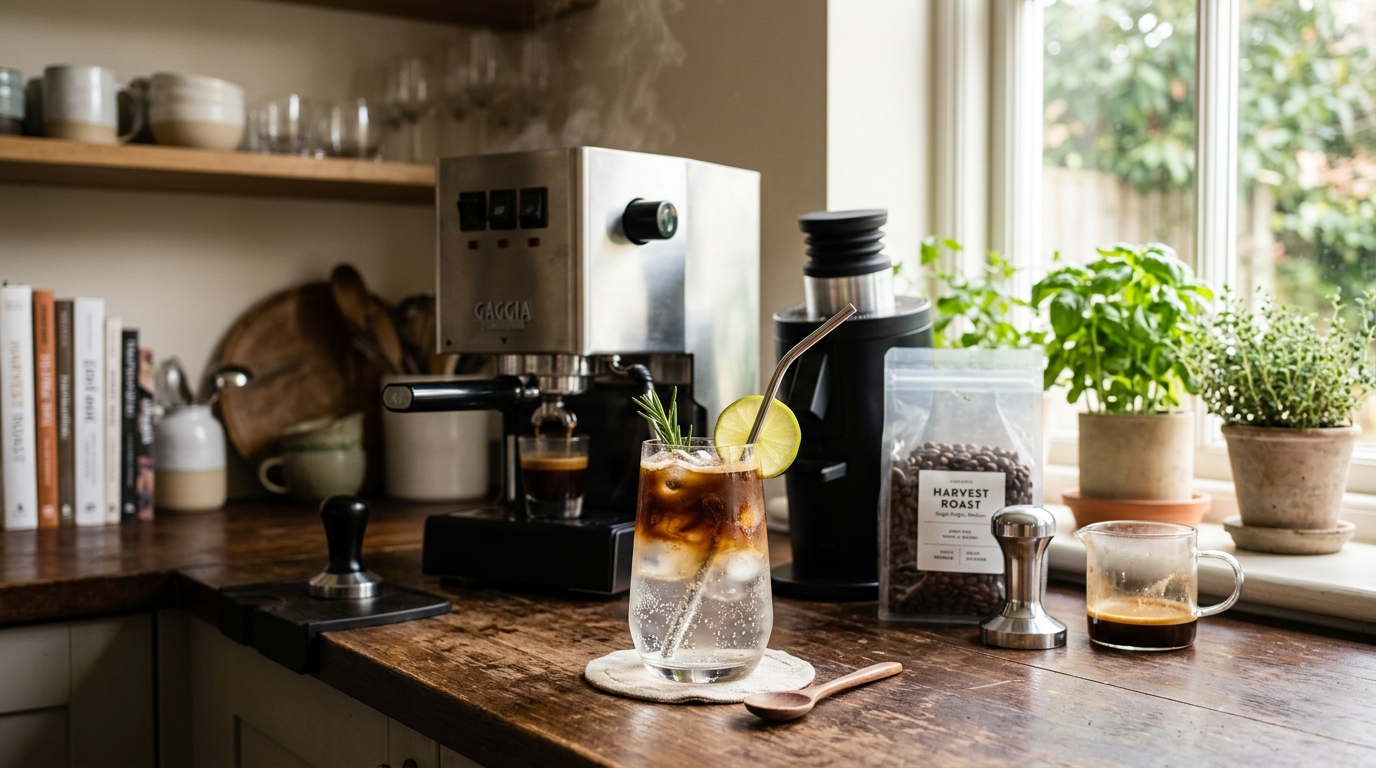
An espresso tonic is a double espresso poured slowly over ice and chilled tonic water — the bitter herbal notes of tonic amplify the espresso’s brightness into something unexpectedly refreshing. Use a 1:3 ratio (1 oz espresso to 3 oz tonic), pour the espresso last, and serve immediately before the carbonation fades. Fever-Tree Indian Tonic Water or Q Tonic are the top choices for a clean, espresso-friendly result.
What is an espresso tonic?
An espresso tonic is exactly what the name suggests: espresso combined with tonic water, served over ice. The drink originated in Scandinavian specialty coffee bars around 2010 and spread globally as cafe culture embraced iced espresso drinks. The reason it works is somewhat counterintuitive — both espresso and tonic water are bitter, but the bitterness lands differently. Espresso carries a roasty, complex bitterness with fruit and chocolate undertones. Tonic water has a clean, herbal quinine bitterness and effervescence. Together they create a layered, refreshing drink with no dairy and no added sugar required.
It sits in a different category than an iced latte or cold brew:
| Drink | Base | Texture | Flavor profile |
|---|---|---|---|
| Espresso tonic | Espresso + tonic water | Sparkling, thin | Bright, bitter, citrusy |
| Iced latte | Espresso + cold milk | Creamy | Smooth, mild, balanced |
| Cold brew on ice | Cold brew concentrate | Still, thin | Mellow, low acidity |
| Americano on ice | Espresso + cold water | Still, thin | Espresso-forward, no carbonation |
What you need
Required:
- An espresso machine (or strong AeroPress concentrate — see below)
- Tonic water, chilled
- Ice — preferably large cubes or one big cube to slow dilution
- A tall glass (12-16 oz)
Helpful:
- A kitchen scale to weigh your espresso output for consistency
- A pouring spoon to slow the espresso pour and preserve carbonation layers
The equipment bar is low. If you already make espresso at home, you need nothing new except tonic water. The drink shines brightest when your espresso is dialed in — a well-extracted shot is the difference between an espresso tonic that tastes bright and complex versus one that just tastes harsh.
Best for making espresso tonics and other iced espresso drinks at home
Breville Barista Express Espresso Machine
The Barista Express includes a built-in conical burr grinder and pulls consistent shots at 9 bar. For an espresso tonic, you want a bright, clean extraction — the integrated grinder lets you dial in fresh each morning without a separate grinder investment. The 67 oz water tank means fewer refills during back-to-back iced drinks in summer.
★★★★★ 4.6 · 9,400 reviews
Check current price on Amazon→How to make an espresso tonic: step by step
Step 1: Chill your glass and tonic
Fill a 12-16 oz glass with ice and refrigerate for 5 minutes, or place the glass in the freezer for 2-3 minutes. This small step prevents the tonic water from going flat immediately on contact with a warm glass. While the glass chills, pull your espresso shot so it is ready to pour right away.
Step 2: Pour the tonic water first
Add 3-4 oz of chilled tonic water to the ice-filled glass. Pour gently down the side of the glass rather than straight down into the ice — this preserves the carbonation. The bubbles should settle within 30 seconds into a quiet, fine effervescence.
Standard ratios:
- Milder drink: 1 oz espresso to 4 oz tonic
- Balanced (recommended): 1 oz espresso to 3 oz tonic
- Espresso-forward: 1 oz espresso to 2 oz tonic
Step 3: Pull a fresh double espresso shot
Pull a 36-38g double espresso in 25-30 seconds. Target a slightly brighter extraction than usual — aim for the lower end of your usual shot weight (closer to 36g rather than 40g) to keep the acidity lively without over-extracting. A light or medium roast espresso bean works best here. Dark roasts can clash with the quinine bitterness in tonic, making the drink taste medicinal rather than refreshing.
Let the shot sit for no more than 30 seconds before pouring — the crema is still active and will float more cleanly on tonic.
Best for consistently weighing espresso output for iced drinks
Timemore Black Mirror Basic Plus Espresso Scale
Weighing your espresso output is the fastest way to get consistent shots for an espresso tonic. The Timemore Black Mirror Basic Plus has a 0.1g resolution, responds in under a second, and costs around $50 — far less than the Acaia alternatives. It fits under most portafilters and auto-starts a timer when weight hits the platform.
★★★★★ 4.7 · 2,100 reviews
Check current price on Amazon→Step 4: Pour the espresso over the back of a spoon
This is the key technique step. Hold a spoon upside down just above the tonic water surface and pour the espresso slowly onto the back of the spoon. The spoon breaks the fall of the espresso and slows its entry into the glass, keeping two distinct layers — dark espresso on top, fizzy tonic below — rather than instantly mixing into a muddy brown drink.
The layers are partly visual and partly functional: if you pour fast and mix completely, the carbonation disappears faster and the drink tastes flatter.
Step 5: Serve immediately
Once the espresso is poured, serve and drink within 2-3 minutes. The carbonation from tonic water fades quickly after it contacts the espresso’s heat and surface tension. Stir gently before drinking to integrate the layers — or leave them separate and drink them together naturally as the ice slowly dilutes the drink.
Optional garnishes
A thin slice of lemon or orange peel expressed over the top (squeeze the peel skin-side down to spray the oils) adds a citrus aroma that plays well with both the espresso and the tonic. A few drops of aromatic bitters — Angostura or Bittermens Hopped Grapefruit — take the drink in a cocktail-adjacent direction without any alcohol.
Which tonic water works best?
Not all tonic waters are equal for espresso tonics. The standard supermarket options — Schweppes, Canada Dry — are sweeter and more syrupy, which competes with the espresso rather than complementing it. Premium tonic waters use higher-quality quinine from cinchona bark and lower sugar, which produces a cleaner, more bitter, more espresso-compatible result.
| Product | Best for | Rating | Notes | |
|---|---|---|---|---|
| Fever-Tree Indian Tonic Water | classic espresso tonic with clean bitter finish | ★★★★★ | The benchmark for espresso tonics. Clean quinine bitterness, natural cane sugar, fine bubbles that hold well. Available widely. | Check price |
| Q Tonic Water | lighter sweetness, very fine carbonation | ★★★★★ | Less sweet than Fever-Tree, with a very delicate bubble structure. Works especially well with lighter roast espresso where sweetness could overpower. | Check price |
| 1724 Tonic Water | refined flavor for specialty coffee fans | ★★★★★ | Sourced from Peruvian quinine at 1,724 meters elevation. Subtle, complex flavor. Harder to find but worth it for special-occasion espresso tonics. | Check price |
| Fever-Tree Elderflower Tonic | floral variation with fruit-forward espresso | ★★★★★ | Adds a floral, slightly sweet note. Works best with a naturally processed Ethiopian espresso that already has berry or floral notes. | Check price |
Making an espresso tonic without an espresso machine
If you do not have an espresso machine, a concentrated AeroPress brew is the next best substitute.
AeroPress espresso-style concentrate: Use 20g of finely ground coffee, 60g of water at 200°F (just off boil). Bloom for 30 seconds with 20g of water, then add the remaining 40g. Press slowly after 1 minute total. This produces roughly 40-50ml of concentrated coffee strong enough to hold its own in a tonic.
A Moka pot also works. Use 2-3 oz of dark-roasted Moka pot output over 4-5 oz of tonic. The Moka pot brew lacks the clarity of espresso but the combination still reads as refreshing when the tonic is well-chilled and the carbonation is fresh.
Best for making espresso-style concentrate for tonics without an espresso machine
AeroPress Original Coffee Maker
The AeroPress produces a concentrated, espresso-adjacent brew that works well in an espresso tonic. At around $35 it is the lowest-cost entry point for concentrated coffee at home. Compact, easy to clean, and produces minimal bitterness compared to Moka pot. Inverted brewing method is best for espresso-style output.
★★★★★ 4.8 · 28,000 reviews
Check current price on Amazon→Espresso tonic variations to try
Citrus espresso tonic: Add 0.5 oz of freshly squeezed grapefruit or orange juice to the glass before the tonic. The citrus rounds out the bitterness and adds a sweet-tart layer that bridges the tonic and espresso beautifully.
Sparkling water blend: Replace half the tonic with plain sparkling water (like Topo Chico or San Pellegrino) for a less bitter, lower-sugar version. Same carbonation, half the quinine. Works well if you find pure tonic too medicinal.
Honey espresso tonic: Stir 1 teaspoon of raw honey into the warm espresso shot before pouring it over the tonic. The honey adds sweetness and a floral note without the sharp sweetness of simple syrup. Let the honey dissolve completely in the hot espresso before pouring.
Cold brew espresso tonic: Substitute 1.5-2 oz of cold brew concentrate for the pulled espresso shot. This produces a mellow, slightly sweeter espresso tonic with lower acidity — a good option on days when you want something refreshing but do not want to pull a fresh shot.
Sparkling lemonade tonic: Use half tonic, half sparkling lemonade (San Pellegrino Limonata works well). Bright, citrusy, and refreshing — drinks almost like an adult lemonade with a coffee backbone.
Common mistakes to avoid
Pouring tonic over hot espresso: The espresso shot is around 190°F when it exits the machine. If you pour tonic directly onto hot espresso, the carbonation flashes off in seconds. Always pour tonic into the glass first, over ice, and let the glass cool before adding the espresso.
Using warm or room-temperature tonic: Tonic water loses carbonation faster at higher temperatures. Keep tonic water refrigerated and pour it cold. Room temperature tonic produces a noticeably flat espresso tonic.
Dark roast espresso with aggressive quinine tonic: A heavily dark-roasted espresso and a strongly bitter tonic like 1724 can clash. Both are bitter, but the combined bitterness does not produce balance — it produces a drink that is hard to drink. Use a medium roast espresso if you want to use a premium-quinine tonic.
Pouring too fast: A hard fast pour from the espresso spout into the tonic destroys the carbonation and blends the layers immediately. Slow pour over the back of a spoon takes 10 extra seconds and produces a noticeably better result.
Drinking it slowly: An espresso tonic is not a drink to nurse. The carbonation is fleeting, the ice dilutes the tonic, and within 5-6 minutes it tastes significantly flatter. Make it, serve it, and drink it quickly.
FAQ
Frequently asked questions
Does espresso tonic taste good?
What is the best ratio for espresso tonic?
Can I use any tonic water for espresso tonic?
Should I use light or dark roast espresso for an espresso tonic?
How do I keep the espresso tonic from going flat instantly?
Can I make an espresso tonic with Nespresso?
Bottom line
An espresso tonic is one of the most rewarding iced espresso drinks to make at home — it requires no milk steaming, no special equipment beyond an espresso machine, and produces a result that is genuinely different from any other coffee drink. The technique is simple: pour tonic first, espresso last, slow over a spoon, and serve immediately. Use a light or medium roast espresso, a premium tonic water like Fever-Tree Indian, and drink it within a few minutes. Once you have made one correctly, it becomes a regular part of the warm-weather coffee rotation.
For more: how to pull a perfect espresso shot, how to make cold brew espresso, espresso grind size guide, and how to make cold foam at home.