guides
Espresso vs Drip Coffee: What Actually Differs
Practical comparison of espresso and drip coffee: taste, caffeine, cost, daily effort, and which brewing method fits your lifestyle.
 Elena Marchetti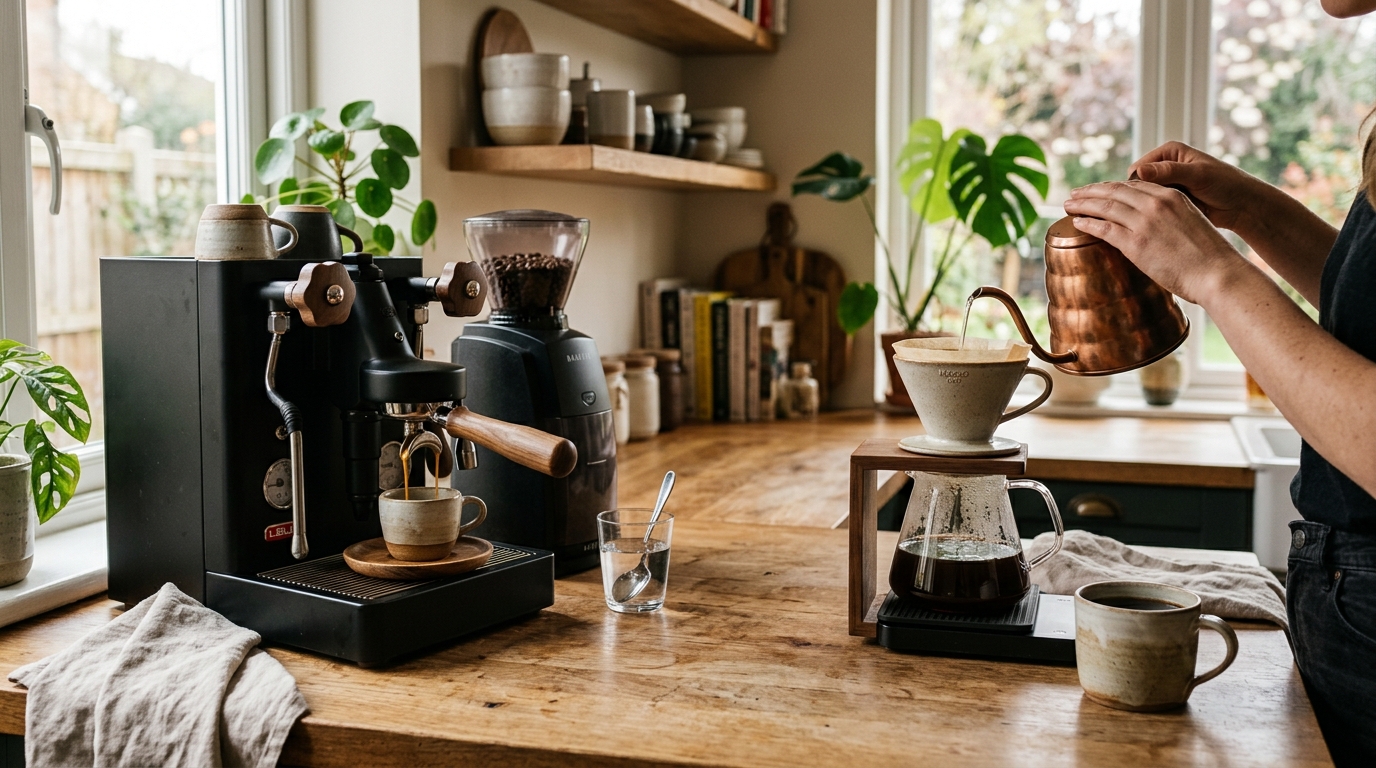
Espresso forces pressurized hot water through finely-ground coffee for a 1-2 oz concentrated shot. Drip coffee uses gravity through coarser grounds for an 8-12 oz cup. For bold café-style drinks like lattes and cappuccinos, espresso is the only path. For easy, hands-off morning volume, drip wins on every practical metric.
How they brew: the fundamental difference
The difference between espresso and drip is not just about strength — it is about physics.
Espresso uses a pump to force water at approximately 9 bar of pressure through a tightly packed puck of finely ground coffee over 25-30 seconds. The result is a 1-2 oz shot that is thick, concentrated, and covered in a layer of emulsified oils called crema. Every variable in espresso — grind size, dose, tamp, water temperature — needs to be dialed in correctly. Shift one variable and the shot tastes sour (under-extracted) or bitter (over-extracted).
Drip coffee works on gravity alone. Hot water from a reservoir heats to 195-205°F and falls through a basket of medium-coarse ground coffee sitting in a paper or metal filter. The water extracts coffee solubles as it passes through, collecting in a carafe below. The result is 8-12 oz of clean, mild-to-medium coffee with no crema. Drip is tolerant of imprecision in a way that espresso is not — within a range, it produces a consistently acceptable result.
The same bean brewed through each method will taste like two different drinks. A medium-roast Ethiopia Yirgacheffe pulled as espresso will taste bright, intensely fruity, and syrupy. The same bean brewed as drip will taste cleaner, more floral, and far lighter in body. Neither is wrong; they are different experiences.
Side-by-side comparison
| Product | Best for | Rating | Notes | |
|---|---|---|---|---|
| Brew time per serving | Espresso: 25-30 seconds active | — | Drip: 4-8 minutes for a full pot; machine does the work | — |
| Serving size | Espresso: 1-2 oz per shot | — | Drip: 6-12 oz per cup; most machines brew 8-12 cups at once | — |
| Caffeine per drink | Espresso: 60-80mg per single shot | — | Drip: 80-150mg per 8 oz cup — drip typically wins on total caffeine | — |
| Entry cost | Espresso: $400-700 machine + grinder | — | Drip: $50-200 total; grinder optional but recommended | — |
| Daily prep time | Espresso: 8-12 min including warm-up and cleanup | — | Drip: 2-4 min; programmable timer handles most of it | — |
| Milk-based drinks | Espresso: lattes, cappuccinos, flat whites | — | Drip: not compatible — coffee dilutes and loses character with milk | — |
| Learning curve | Espresso: 2-4 weeks of active dial-in | — | Drip: nearly zero — consistent results from day one | — |
Taste and strength: what you are actually drinking
One of the most common myths about espresso is that it is stronger than drip coffee. By total caffeine content per drink, that is usually false.
A standard double espresso (2 oz) contains roughly 120-150 mg of caffeine. A standard 12 oz mug of drip coffee contains 150-200 mg of caffeine. If you drink your morning coffee black in normal mug portions, drip almost certainly delivers more caffeine per cup.
What espresso actually is, compared to drip: more concentrated by volume, with a far higher ratio of dissolved solids per ounce. Espresso measures roughly 8-12% total dissolved solids (TDS) versus 1.2-1.5% for drip. That is why espresso tastes thick, intense, and viscous — you are drinking a highly concentrated extraction in a tiny volume.
This concentration is exactly why espresso survives being poured over 8 oz of steamed milk. A double espresso in a latte still tastes like coffee. A shot of drip coffee added to the same amount of milk tastes like warm, vaguely coffee-flavored milk. Milk-based drinks — lattes, cappuccinos, flat whites, macchiatos — exist because espresso concentration holds up through dairy. Drip cannot replicate them.
From a pure flavor standpoint:
- Espresso emphasizes body, crema, and concentrated sweetness or acidity. High pressure extracts more oils, which contribute mouthfeel and intense aromatics.
- Drip emphasizes clarity, brightness, and delicate aromatics. Paper filters trap oils; the result is a cleaner, lighter cup that lets subtle flavors read more clearly.
Cost to get started
Espresso gear costs substantially more at every tier.
Entry-level espresso ($400-700 all-in): A machine like the Gaggia Classic Pro ($500) or Breville Dedica ($200) paired with a budget burr grinder like the Baratza Encore ($170) or Eureka Mignon Notte ($250). You can get started for around $400, but expect a few weeks of inconsistency while you learn to dial in.
Mid-tier espresso ($800-2,000): Machines like the Breville Barista Pro ($800), Rancilio Silvia ($700), or Breville Barista Express (~$700 with built-in grinder) paired with quality grinders. This tier produces reliably excellent espresso once you understand what you are doing.
Entry-level drip ($50-150): The Bonavita 8-Cup ($70), OXO Brew 9-Cup ($200), or Cuisinart DCC-3200 ($60) all brew at SCAA-recommended temperatures and produce excellent results immediately. No learning curve, no dial-in.
Mid-tier drip ($150-350): The Technivorm Moccamaster ($350) is the professional benchmark, used in coffee competitions and specialty cafes. The OXO Brew with integrated scale ($200) is the value standout. Both brew flawlessly without any calibration.
The practical summary: world-class drip coffee is achievable for under $250. World-class espresso at home realistically requires $700-1,500 to do properly.
Daily workflow: what it actually looks like
Understanding the daily commitment matters more than the brew time metric alone.
Espresso morning routine (in order):
- Turn on the machine and let it heat (15-30 minutes for most; some machines auto-preheat via timer)
- Weigh and grind 18g of beans (1-2 minutes)
- Distribute grounds with a WDT tool, tamp level, lock portafilter
- Pull the shot (30 seconds), watching yield on a scale
- Steam milk if making a latte (1-2 minutes)
- Purge and wipe the steam wand; rinse the portafilter (2 minutes)
Total: 8-12 minutes from cold machine to finished drink.
Drip coffee morning routine (in order):
- Add water to the reservoir and ground coffee to the filter basket
- Press start (or wake up to pre-set auto-brew)
- Wait 5-7 minutes while the machine does everything
Total: 6-8 minutes, mostly passive. With an auto-timer, the effort collapses to pouring.
If you value simplicity and passive time, drip is dramatically easier to live with. If you enjoy the ritual — the focus of weighing, tamping, and watching a shot pull — that time is part of the appeal of espresso, not a cost.
When espresso makes more sense
Choose espresso if:
- You drink lattes, cappuccinos, or flat whites. These drinks fundamentally require espresso. There is no drip-based substitute.
- You prefer intensity over volume. If a small, rich 2 oz drink satisfies more than a 12 oz mild cup, espresso is built for your preferences.
- You enjoy craft and want something to learn. Espresso dial-in has a real learning curve, but it is genuinely satisfying once you nail a shot. Many home baristas find it meditative.
- You already have a quality burr grinder. If you own a good grinder for pour-over or Aeropress, the marginal cost of adding an espresso machine drops significantly.
Best for the best all-in-one starter espresso setup
Breville Barista Express Espresso Machine
The Barista Express combines a 15-bar pump machine with a built-in conical burr grinder, PID temperature control, and a steam wand in a single unit. It removes the separate grinder cost and simplifies setup for beginners. Expect 2-3 weeks of dial-in before shots become reliably good; expect to still be using it 5+ years later.
★★★★★ 4.5 · 15,200 reviews
Check current price on Amazon→When drip makes more sense
Choose drip if:
- You drink black coffee or coffee with a small amount of milk. Drip coffee stands on its own without concentration. A great drip cup is genuinely satisfying without needing to be an espresso drink.
- You brew for multiple people. Drip machines produce 8-12 cups in a single brew cycle. Espresso means pulling a separate shot for every drink.
- Budget or counter space is limited. A quality drip maker takes up less space than an espresso setup and costs 50-70% less at equivalent quality.
- You want reliability without learning anything. Set your grind coarseness once, measure your coffee-to-water ratio once, and get consistent results every morning forever.
- You want automation. Programmable auto-brew timers on drip machines are genuine quality-of-life features that almost no espresso machines offer.
Best for the best everyday drip machine for serious coffee drinkers
OXO Brew 9-Cup Coffee Maker
The OXO Brew 9-Cup heats water to the SCAA-recommended 200°F, distributes it evenly through a rainmaker showerhead, and stores brewed coffee in an insulated thermal carafe that keeps it hot without a hot plate that overcooks the coffee. It produces noticeably better drip coffee than most machines at twice its price. A strong value at around $200.
★★★★★ 4.6 · 8,900 reviews
Check current price on Amazon→Can you justify having both?
Many home coffee drinkers eventually run both a drip machine and an espresso setup. The usage pattern is natural:
- Drip on weekday mornings: Set the timer the night before, wake up, pour a cup. Maximum convenience, zero effort.
- Espresso on weekends or for guests: Pull a double shot, steam some whole milk or oat milk, produce a proper cappuccino or flat white.
This is not an unusual outcome. The two machines complement rather than duplicate each other. Most people start with drip, graduate to espresso when they want milk-based drinks, and keep the drip machine for volume.
If you are trying to choose between them and budget allows only one: think honestly about what you drink most mornings. A latte drinker who buys a drip machine will regret it. A black-coffee drinker who spends $800 on espresso gear will regret it too.
FAQ
Frequently asked questions
Is espresso stronger than drip coffee?
Can I use an espresso machine to make regular drip-style coffee?
Is espresso just really strong coffee?
Do I need an espresso machine to make lattes at home?
What is the minimum budget for decent home espresso?
Does a burr grinder make a real difference for drip coffee?
Bottom line
Drip coffee is the better choice for most households: lower cost, zero learning curve, automation-friendly, and capable of excellent results. Espresso is the right choice if you drink milk-based café drinks or want the precision and intensity of a concentrated shot. The two are different enough that switching one for the other is usually not a good substitution — pick based on what you actually drink.
For espresso specifics: machine picks, the grinder guide, and the shot dial-in walkthrough. For the mechanics of espresso extraction: espresso grind size explained.