roundups
Best Espresso Machines for Small Kitchens 2026
The 5 best compact espresso machines for small kitchens in 2026, from the 6cm-wide DeLonghi Dedica to the Breville Bambino with PID in 8 inches.
 Elena Marchetti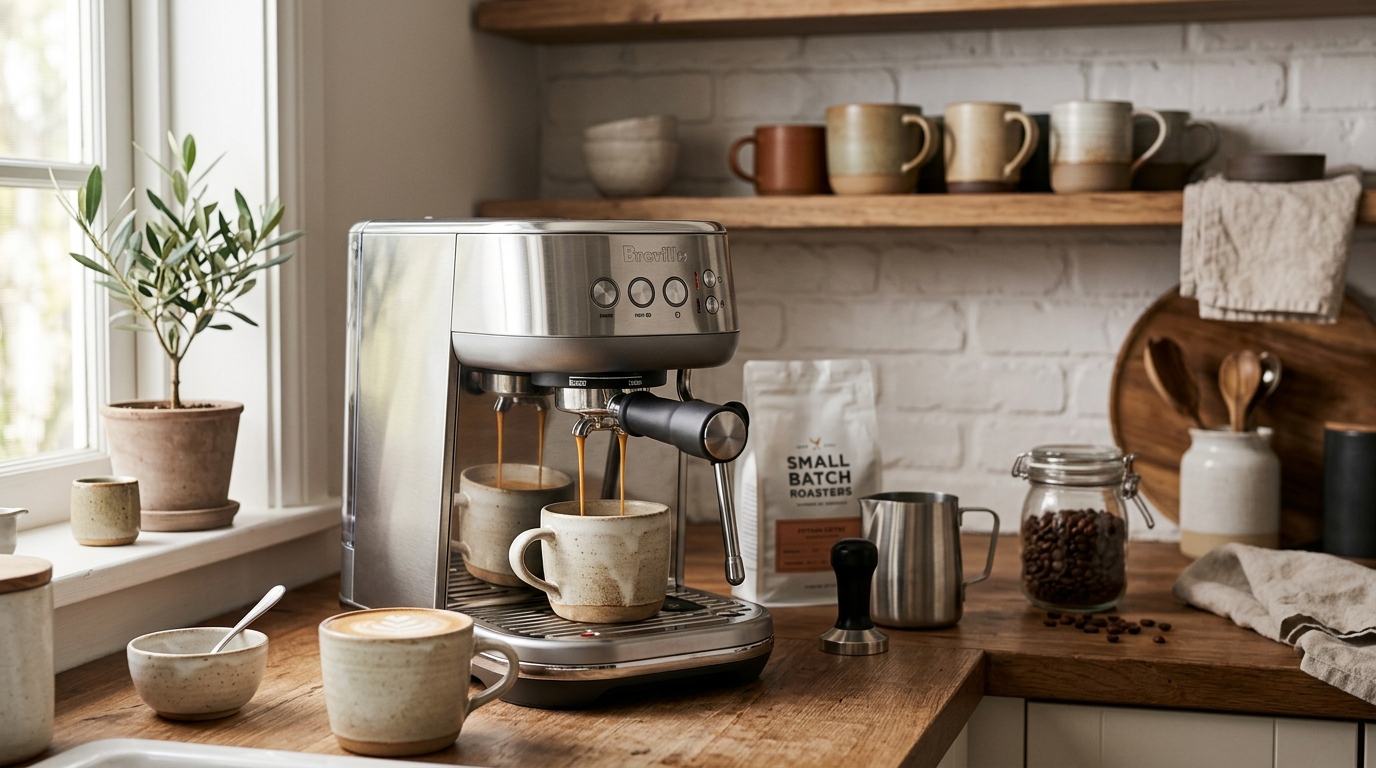
The De’Longhi Dedica Arte is the top pick for small kitchens at 2.3 inches (6 centimeters) wide — the slimmest full-pump espresso machine in production. For a step up in features and brew quality, the Breville Bambino Plus fits under 8 inches wide and delivers PID temperature control and auto-steaming milk in a compact, capable package built to last.
What to measure before you buy
Most people underestimate how much space a home espresso machine needs — and overestimate how much their preferred machine actually requires. The confusion almost always comes from focusing on width while ignoring two other critical dimensions.
Width is the most critical measurement. Espresso machine widths in the sub-$1,000 category range from 4.7 inches (Nespresso Essenza Mini) to 13 inches or more (super-automatics). The De’Longhi Dedica Arte at 6 centimeters (2.3 inches) is the narrowest full-pump machine in production. Breville’s Bambino and Bambino Plus both measure 7.7 inches at their widest point. The Gaggia Classic Pro runs approximately 7.5 inches. Most machines in the $300-600 range fit somewhere between 7 and 9 inches — narrower than most people assume.
Depth is where many buyers get surprised. Espresso machines typically run 11-16 inches deep from front to back wall, but the portafilter handle extends outward when locked in place. On most machines, a locked portafilter adds 4-6 inches of clearance required in front of the machine for the handle to swing down during locking. A machine that slots into your 8-inch gap still needs that swing clearance in front — account for it when measuring your space.
Height determines whether a machine can live permanently under your upper cabinets. Standard espresso machines stand 12-14 inches tall at the body. Add 2-3 inches above the machine for the water reservoir lid, which opens upward on most designs. If your cabinets sit 15 inches above the counter, your options shrink dramatically. The De’Longhi Dedica Arte is an exception: its water reservoir loads from the front rather than lifting from the top, making it the best choice for genuinely low-clearance situations.
Before looking at any machine, write down three numbers: available counter width, depth you can spare, and height to your upper cabinet or range hood. A machine that does not fit your space is no machine at all.
What makes a compact espresso machine worth buying
Small size is table stakes. The real question is whether a compact machine can make genuinely good espresso — and the answer depends on two factors: portafilter diameter and temperature control.
The portafilter diameter is the primary indicator of the machine’s performance ceiling. The De’Longhi Dedica Arte uses a 51mm portafilter — the smallest mainstream espresso size, with the fewest aftermarket accessories available. Breville’s Bambino family uses a 54mm portafilter — a step up in accessory availability and puck surface area, though narrower than the prosumer 58mm standard. The Gaggia Classic Pro uses a full 58mm portafilter despite its reasonable footprint, giving you access to the complete prosumer accessory ecosystem: bottomless portafilters, IMS and VST precision baskets, calibrated tampers, and WDT tools.
Temperature control is the second differentiator. Without precise temperature regulation, espresso machine boilers surf between shots, producing inconsistent extraction. Breville’s ThermoJet architecture delivers both rapid heat-up (3 seconds to brewing temperature) and consistent shot-to-shot temperature regulation by using a flow-through heating element rather than a traditional boiler. The De’Longhi Dedica Arte uses a thermoblock without digital temperature control; a warm-up flush before pulling your shot brings it closer to stable extraction temperature. The Gaggia Classic Pro benefits enormously from a PID modification ($40-60 in parts, a 2-hour documented install) but ships without one.
At compact sizes, you are not trading away espresso quality per se — you are trading away convenience features and long-term upgrade paths. A well-set-up De’Longhi Dedica Arte with an aftermarket non-pressurized basket and a quality grinder produces legitimate, repeatable espresso.
Quick comparison
| Product | Best for | Rating | Notes | |
|---|---|---|---|---|
| DeLonghi Dedica Arte | best ultra-slim at 6cm wide | ★★★★☆ | 51mm. 6cm wide. Thermoblock. Front-load reservoir. No PID. | Check price |
| Breville Bambino Plus | best compact with PID and auto-steam | ★★★★☆ | 54mm. 7.7 inches wide. ThermoJet. Auto-frothing steam wand. | Check price |
| Breville Bambino | best compact with PID under $300 | ★★★★☆ | 54mm. 7.7 inches wide. ThermoJet. Manual steam wand. | Check price |
| Gaggia Classic Pro | best 58mm machine in a compact footprint | ★★★★★ | 58mm. 7.5 inches wide. Single boiler. No PID stock. Italian-made. | Check price |
| Nespresso Essenza Mini | best pod machine for the tightest spaces | ★★★★★ | 4.7 inches wide. Capsule-based. No grinder needed. Under $150. | Check price |
The picks
Best ultra-slim: De’Longhi Dedica Arte
Best for users where counter width is the absolute binding constraint
De'Longhi Dedica Arte
The Dedica Arte is 6 centimeters wide. That single fact explains its entire existence. In a kitchen where the only available gap is between the microwave and the cabinet, the Dedica Arte fits when nothing else does. It produces legitimate espresso via a 15-bar vibratory pump and thermoblock heating — not steam pressure — which is the key distinction from the cheap combination machines that crowd the same price range. The panarello steam wand handles basic frothing. The key upgrade: the factory pressurized portafilter can be swapped for an aftermarket 51mm non-pressurized portafilter and basket kit, which unlocks substantially better espresso quality from any decent grinder. The front-loading water reservoir is a genuine advantage for low-clearance cabinet situations. If counter width is your dominant constraint and you have a quality grinder or plan to buy one, the Dedica Arte is the obvious answer in this price range.
★★★★☆ 4.2 · 2,800 reviews
Check current price on Amazon→Pros
- 6cm wide — fits kitchen gaps where no other espresso machine reaches
- Front-loading water reservoir works under low overhead cabinets without lifting
- Legitimate 15-bar pump produces real espresso rather than steam-pressure coffee
- Under $220 — the most affordable capable machine in this guide
- Aftermarket non-pressurized portafilter upgrade is readily available and affordable
Cons
- 51mm portafilter has the smallest aftermarket accessory ecosystem of any machine here
- No PID or precise temperature control — a warm-up flush is required for consistent shots
- Panarello steam wand produces basic foam but cannot match Breville or Gaggia steaming
- Plastic construction is the least durable in this group
- Factory pressurized basket limits espresso quality ceiling — aftermarket upgrade is necessary for best results
Best compact plug-and-play: Breville Bambino Plus
Best for people who want excellent espresso in a compact machine with zero learning curve
Breville Bambino Plus
The Bambino Plus fits in 7.7 inches of counter width and delivers more features per cubic inch than anything else in this guide. ThermoJet technology reaches brewing temperature in 3 seconds — you pull a shot within moments of turning it on from cold. Temperature is regulated consistently across every shot without the inconsistency of traditional thermoblock machines. The auto-frothing steam wand textures milk automatically: choose your target density (latte, flat white, or cappuccino level) and the wand hits that mark reliably every time. For someone who wants good espresso every morning without becoming a dedicated enthusiast, the Bambino Plus is the clearest recommendation. It does not have an upgrade or mod path like the Gaggia Classic Pro — you replace it rather than improve it — but out-of-box performance is entirely sufficient for most users over several years of daily use.
★★★★☆ 4.4 · 3,200 reviews
Check current price on Amazon→Pros
- PID-level temperature control standard — no modification required for shot consistency
- 3-second heat-up via ThermoJet — immediate use from a complete cold start
- Auto-frothing steam wand is genuinely beginner-proof and produces consistent milk texture
- Compact at 7.7 inches wide with a minimal footprint relative to its feature set
- Ships with a non-pressurized basket suitable for use with a quality grinder
Cons
- 54mm portafilter — smaller accessory ecosystem than the 58mm prosumer standard
- Auto-steam provides less texture control than manual technique for experienced baristas
- No meaningful upgrade or mod path — replacement over time rather than incremental improvement
- Plastic body feels less premium than the Gaggia Classic Pro at a comparable price point
Best compact value with PID: Breville Bambino
Best for users who want PID and ThermoJet performance without paying for auto-steam
Breville Bambino
The Bambino is the Bambino Plus with the auto-frothing wand swapped for a standard manual steam wand — and the price drops $100-150 as a result. Everything that matters for espresso quality is identical: ThermoJet heating, precise temperature control, 3-second warm-up time, and a 54mm non-pressurized basket. The manual steam wand takes 1-2 weeks to learn for consistent microfoam, but it gives experienced users more control over milk texture than the auto-frother ever could. If you rarely make milk drinks, prefer to develop a real steaming technique, or are cost-sensitive, the Bambino is better value than the Plus. It is also the smallest machine by overall volume in this guide — the narrowest and shortest Breville espresso machine available.
★★★★☆ 4.3 · 2,100 reviews
Check current price on Amazon→Pros
- Same ThermoJet performance and temperature regulation as the Bambino Plus at $100-150 less
- Smallest overall volume of any machine in this guide
- Manual steam wand builds real technique and delivers better microfoam control for experienced users
- Ships with non-pressurized basket for use with a quality grinder from day one
Cons
- Manual steam wand has a real 1-2 week learning curve to produce good microfoam consistently
- 54mm portafilter carries the same ecosystem limitation as the Bambino Plus
- No auto-steam fallback for quick morning drinks or less practiced guests
Best 58mm compact: Gaggia Classic Pro
Best for espresso enthusiasts who want 58mm prosumer capability in a reasonable footprint
Gaggia Classic Pro
The Gaggia Classic Pro is approximately 7.5 inches wide — only marginally narrower than the Breville Bambino family, but the performance ceiling gap is enormous. The 58mm portafilter gives you access to the full prosumer accessory ecosystem: bottomless portafilters, IMS and VST precision baskets, calibrated tampers, and WDT tools. No PID comes from the factory, but the PID mod is a documented 2-hour installation using about $50 in parts and transforms shot consistency. The OPV (over-pressure valve) can be tuned from 11 bar to 9 bar in 10 minutes with an Allen key. Post-modifications, this machine performs at the $1,000 level. Italian-made with a 15-20 year service life when properly maintained. For a user with 8 inches of counter space and genuine long-term interest in espresso as a craft, the Classic Pro fits the space and rewards the investment over years.
★★★★★ 4.6 · 4,100 reviews
Check current price on Amazon→Pros
- 58mm portafilter — the prosumer standard with the widest aftermarket accessory ecosystem
- Italian-made construction with a 15-20 year design life under regular maintenance
- Ships with both pressurized and non-pressurized baskets
- Best-documented mod ecosystem: PID install, OPV tuning, and steam wand upgrades all well-covered
- Resale value holds far better than any other machine in this price range
Cons
- No PID from the factory — temperature inconsistency without the $50 mod
- 7.5 inches wide is only marginally narrower than standard-sized espresso machines
- Requires patience and genuine interest — not a plug-and-play experience
- Stock OPV at 11 bar is above the optimal 9 bar extraction pressure
Best pod machine for the tightest spaces: Nespresso Essenza Mini
Best for users where the counter is under 5 inches wide or workflow simplicity is the top priority
Nespresso Essenza Mini
The Nespresso Essenza Mini is 4.7 inches wide and 12.8 inches deep — the smallest machine in this guide capable of producing espresso-style coffee. It uses Nespresso OriginalLine capsules at a fixed recipe: 19 bar extraction, consistent temperature, no grinder, no workflow complexity, and a 25-second heat-up. The trade-off is complete: you cannot change the grind, dose, yield, or extraction time. The flavor ceiling is capped by the capsule. But for a counter that physically cannot fit a real espresso machine — or for a user who wants zero morning workflow — the Essenza Mini is the practical answer. Pair it with a Nespresso Aeroccino milk frother (sold separately) for lattes and cappuccinos. At under $150 and with capsules available at most grocery stores, the total cost of entry is the lowest in this guide.
★★★★★ 4.5 · 8,500 reviews
Check current price on Amazon→Pros
- 4.7 inches wide — the smallest machine in this guide by a considerable margin
- No grinder required — zero workflow complexity or technique needed
- Consistent results from a fixed capsule recipe every single time
- Under $150 — the lowest total cost of entry in this guide
- Capsules available at grocery stores, not just online
Cons
- Capsule-based — no adjustability in grind, dose, or extraction parameters whatsoever
- Ongoing capsule cost is higher per cup than ground coffee at any price point
- No milk frothing built-in — separate Aeroccino or frother purchase required for milk drinks
- Does not develop any real espresso technique — no pathway for improvement or skill building
What to skip
Any machine marketed as “steam pressure espresso.” True espresso requires a pump delivering 9 bars of sustained pressure through the puck. Machines using the phrase “steam pressure” or “uses steam to brew” produce 1-2 bar — essentially moka pot coffee at an espresso price and in an espresso form factor. No compact footprint justifies buying one of these.
Combination pod-and-ground machines that claim to make espresso and drip coffee from the same unit. The espresso attachment on these machines is invariably underpressured and under-temperature-controlled. You get one large appliance that executes both functions poorly and takes up more counter space than a dedicated machine in either category.
Machines with “professional 15-bar” claims at very low prices. Pump pressure alone does not make good espresso. You also need proper temperature regulation, a functional filter basket design, and a grinder capable of espresso-fine grinding. Some budget machines list a 15-bar pump as the headline spec while shipping with pressurized baskets, poor thermoblocks, and no temperature stability. Read beyond the pressure number.
Used machines without documented maintenance history. Used Gaggia Classic Pros, La Pavoni lever machines, and Rancilio Silvia units come up at attractive prices. Without knowing the descaling, gasket, and OPV history, you are buying unknown maintenance debt. For a small kitchen where you cannot easily work on the machine, a new De’Longhi Dedica Arte or Breville Bambino is more predictable and backed by a warranty.
FAQ
Frequently asked questions
What is the narrowest espresso machine that makes real espresso?
Do I need a grinder if I buy a compact espresso machine?
Can I fit an espresso machine under upper kitchen cabinets?
Is the DeLonghi Dedica Arte actually good, or just small?
How does the Breville Bambino Plus compare in size to the Gaggia Classic Pro?
What is the best espresso machine for a studio apartment?
Bottom line
Best ultra-slim: De’Longhi Dedica Arte — 6 centimeters wide, a legitimate 15-bar pump, and a front-loading reservoir that works under any cabinet clearance. Best compact plug-and-play: Breville Bambino Plus — PID-level temperature control, 3-second heat-up, and auto-steaming in 7.7 inches. Best compact value: Breville Bambino — the same core technology as the Plus at $100-150 less without auto-steam. Best 58mm compact: Gaggia Classic Pro — the highest performance ceiling in roughly the same footprint as the Breville machines, with patience and two weekends of modding required. Best for the tightest counters: Nespresso Essenza Mini — 4.7 inches wide, no grinder, no workflow, no ceiling.
Whichever machine fits your space, pair it with a quality grinder — see our best espresso grinders guide for picks at every budget. For the full sub-$500 category beyond compact-only machines, see best espresso machines under $500. If you are ready to spend more and have the space, best home espresso machines covers the full prosumer tier. And if you want to skip electricity entirely, best manual espresso machines covers lever and hand-pump options with a near-zero footprint.